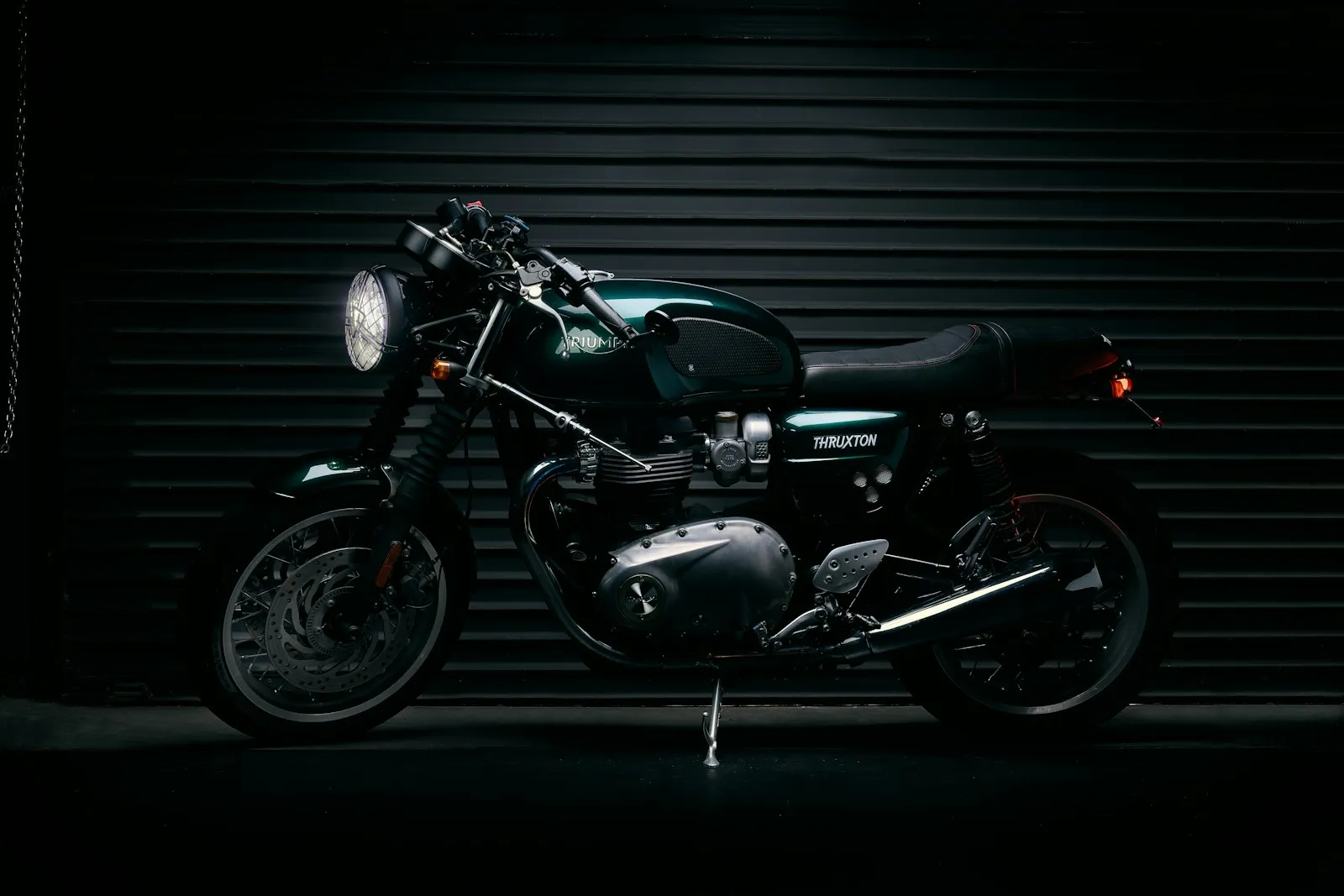
Modern retros are heavy, and they are heavy in specific, findable places. A Thruxton 1200R leaves the factory at 203kg wet. Ours is now 191kg, and the engine has not been touched.
Every gram came off the periphery, which is the good news, because peripheral weight is cheap to remove and does not affect reliability.
Where the weight actually hides
Not where you think. People assume the frame or the engine, and neither is realistic on a modern bike. The weight is in the exhaust system, the subframe furniture, the lighting, and a surprising amount of steel bracketry holding it all on.
The standard exhaust on a Euro4 Thruxton is a genuinely remarkable object: two catalytic converters, a link pipe and two silencers, totalling 12.1kg. A pair of decent aftermarket cans and a link pipe came in at 6.7kg. That single change is nearly half the total saving.
The bits nobody weighs
We weighed everything that came off, which is tedious and completely worth it, because it stops you spending money in the wrong places.
The standard mirrors are 640g for the pair. The indicators, with their brackets and the wiring loom section that serves them, are another 470g. Bar-end mirrors and LED indicators saved 1.1kg for under 600 zloty, which is the best money-per-gram on the whole bike.
Weigh everything that comes off. It is tedious and it stops you spending money in the wrong places.
What we did not do
No lithium battery. They save around 2kg and we may still fit one, but a lithium battery in a bike that sits through a Polish winter needs a charger regime we were not confident of maintaining.
No carbon bodywork. The saving over the standard plastic is small, the cost is not, and a cracked carbon side panel is a much worse afternoon than a cracked plastic one.
Does twelve kilos matter?
Honestly? You feel it most at walking pace and when picking the bike up off the sidestand. On the move, the exhaust change alters the character far more than the mass does.
If you want a Thruxton to feel lighter, do the exhaust and the mirrors, ride it, and then decide whether you care enough to chase the rest.
Where the twelve kilos went
| Exhaust system | Two cats and two silencers to link pipe and cans | 5.4 kg |
|---|---|---|
| Subframe & rack | Standard rear rack, grab rails, bracketry | 2.3 kg |
| Seat unit | Standard dual seat to solo pan and cowl | 1.8 kg |
| Mirrors | Standard stalks to bar-ends | 0.64 kg |
| Indicators | Standard to LED, including loom | 0.47 kg |
| Mudguards | Front and rear, cut and replaced | 0.9 kg |
| Miscellaneous | Toolkit tray, heat shields, brackets | 0.5 kg |
| Total | Nothing from the engine | 12.0 kg |
Common questions
How much weight can you remove from a Triumph Thruxton?
Around twelve kilos without touching the engine or spending serious money. The exhaust system alone accounts for over five of those. Beyond twelve you are into lithium batteries and carbon bodywork, where cost per gram rises sharply.
What is the cheapest weight saving on a modern retro?
Mirrors and indicators. Swapping to bar-end mirrors and LED indicators saves around 1.1kg for under 600 zloty, which is the best value change on the bike by a wide margin.
Does removing weight make a Thruxton faster?
Barely. Twelve kilos on a 203kg bike is under six percent and you will not feel it accelerating. You feel it at walking pace, on the sidestand, and in how willing the bike is to change direction.
Is it worth fitting a lithium battery to save weight?
It saves about two kilos but needs a disciplined charging routine over winter. If the bike sits unused for months in the cold, a conventional battery is the less annoying choice.
Where can I see more of this build?
The full photo set for every build is on Instagram at @ironandgasolineofficial, and questions get answered there.
Got a question about this build, or built one yourself? The conversation happens on Instagram — the full photo set for this bike is up there, and I answer everything in the comments.
Join the thread on Instagram