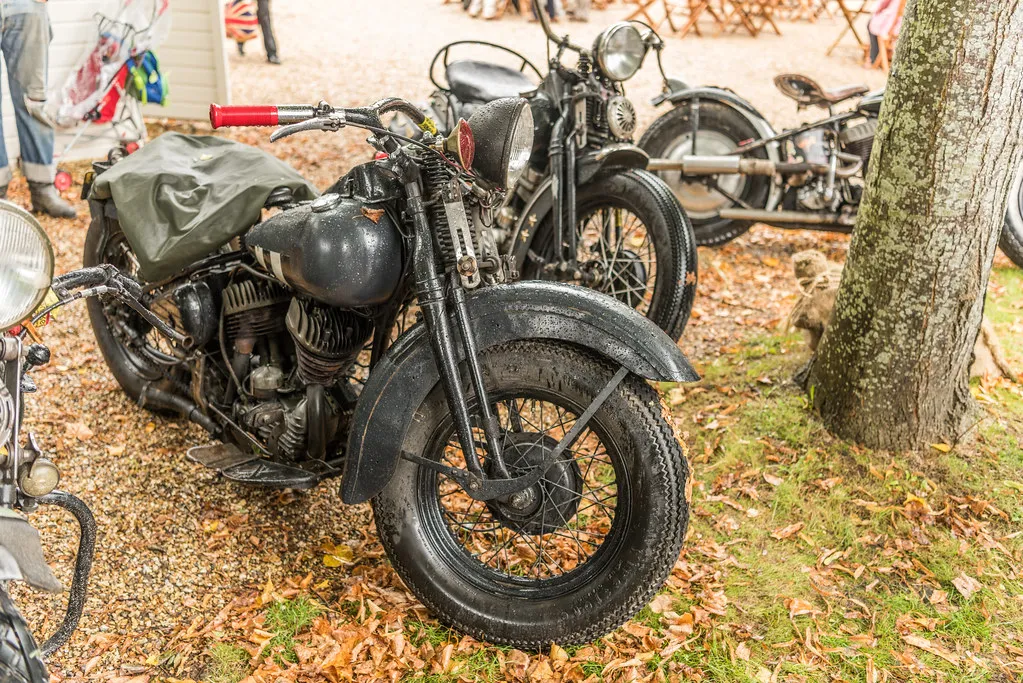
Hardtails look extraordinary. The rear wheel tucked into the frame, no shocks breaking the line, that low unbroken sweep from the tank to the axle. There is a reason the look has survived eighty years.
There is also a reason the industry abandoned it the moment it could afford to.
What you are actually signing up for
No rear suspension travel. None. Every joint in the road goes through the tyre, the frame, the seat and into the base of your spine.
For an hour on smooth tarmac this is romantic. Over years, on real roads, it is a genuine health question, and riders who have done big mileage on rigid frames will tell you about it at length if you ask.
The structural part nobody mentions
A weld-on hardtail section replaces the entire rear of a frame that was designed with suspension. The original frame absorbed load through the shock mounts and the swingarm pivot. A hardtail routes that load straight through the welds you just made.
If you are buying a bolt-on hardtail kit for a common donor from an established maker, that engineering has been done. If you are cutting and fabricating your own, understand that you are making a structural decision about the part of the bike that keeps the rear wheel attached.
You are not making a styling decision. You are making a structural decision about the part that keeps the rear wheel attached.
The sprung seat option
This is what the original bobber builders actually did, and it is still the best answer. A solo seat on springs, or a modern equivalent on a pivot with a damper, gives you 50 to 75mm of travel exactly where you need it.
The bike keeps the rigid rear triangle and the visual line. Your spine keeps most of its life expectancy. Every hardtail we would recommend has one.
The option nobody considers
Keep the swingarm, fit shorter shocks, and reshape the rear loop to close up the gap.
You lose maybe 30mm of travel and gain a rear end that looks close to rigid from ten feet, which is the distance at which anyone actually looks at your motorcycle. It is reversible, it is not structural, and it costs a fraction of a hardtail conversion.
Verdict
If it is a show bike or a short-run weekend machine, build the hardtail and enjoy it. If you intend to ride it properly, use the fake-rigid approach and put the money into a seat.
Hardtail vs the alternatives
| True hardtail | Rear suspension travel | 0 mm |
|---|---|---|
| True hardtail | Structural work required | Frame cut & weld |
| Sprung solo seat | Travel at the seat | 50-75 mm |
| Sprung solo seat | Structural work required | None |
| Lowered shocks | Travel retained | ~60 mm |
| Lowered shocks | Reversible | Yes |
| Lowered shocks | Typical cost | 900-1,600 zl |
Common questions
Are hardtail motorcycles uncomfortable?
Yes, unavoidably. There is no rear suspension travel, so every road imperfection goes through the frame and seat into your spine. Fine for short rides, genuinely damaging over years of real mileage.
Is welding a hardtail onto a frame safe?
It depends entirely on who did the engineering. A bolt-on or weld-on kit from an established maker for a common donor has been designed and tested. Fabricating your own is a structural decision about the part holding the rear wheel on.
How do you get the hardtail look without a hardtail?
Keep the swingarm, fit shorter shocks and reshape the rear loop to close the gap. You lose around 30mm of travel and it looks close to rigid from a few feet away. It is reversible and much cheaper.
Does a sprung seat make a hardtail comfortable?
It makes it tolerable rather than comfortable. A sprung solo seat gives 50 to 75mm of travel where it matters most, which is what the original bobber builders used and still the sensible choice.
Where can I see more of this build?
The full photo set for every build is on Instagram at @ironandgasolineofficial, and questions get answered there.
Got a question about this build, or built one yourself? The conversation happens on Instagram — the full photo set for this bike is up there, and I answer everything in the comments.
Join the thread on Instagram